Last Updated on April 27, 2026 by Writer
May on Anna Maria Island is a late-spring inshore and nearshore fishery driven by warm water, stable bait, and strong pass current. The primary targets are snook, spotted seatrout, redfish, Spanish mackerel, tripletail, and early migratory tarpon. This guide solves three problems: what to target, where fish position, and how to rig for the zones that produce in May. It is built for anglers who want operational detail instead of seasonal hype. Expect steady action on trout, mackerel, and school snook with moderate skill, while large snook and tarpon require advanced live-bait control, heavier leaders, and disciplined boat positioning.
How May Conditions Control the AMI Fishery
May success depends on five variables: water temperature, bait concentration, tide height, pass current, and wind direction. When those line up, the fishery becomes predictable. When they do not, the same flat, shoreline, or pass can look empty.
| Variable | Typical May Condition | Effect on Fish Position | Best Adjustment |
|---|---|---|---|
| Water temperature | Usually upper 70s to low 80s | Pushes snook, mackerel, and tarpon into stronger feeding windows; trout feed earlier on the flats | Fish dawn, low light, and tide changes instead of dead mid-day water |
| Tide height and flow | Higher late-spring tides with strong pass movement | Floods mangroves for redfish and snook; sharpens pass and beach lanes for larger fish | Fish shorelines on higher water and passes on outgoing flow |
| Bait profile | Whitebait, threadfins, shrimp, and occasional pass crabs | Predators key on local forage size and stay near dense bait schools | Match live bait size to the bait actually present, not the bait you wish you had |
| Wind and clarity | Light east or south winds help beach water; stronger west wind muddies open edges | Determines whether tarpon, mackerel, and tripletail stay in the plan | Shift inside to leeward mangroves and grass when the beach loses clarity |
The fishery separates into two working zones: inside water for snook, trout, and redfish, and beach or pass water for tarpon, mackerel, and tripletail. Most poor May results come from mixing those zones without changing leader strength, bait type, or drift speed.
- Primary fish mix: snook, trout, redfish, Spanish mackerel, tripletail, and early tarpon.
- Primary water types: grass flats, mangrove shorelines, passes, beaches, and trap-marker lanes.
- Bait profile: whitebait and threadfins when nettable, live shrimp as a backup and teaching bait, pass crabs for select tarpon tides.
- Tackle baseline: 2500 to 4000 size spinning gear with 10 to 20 pound braid for most work, then 50 to 80 pound leaders only for tarpon and oversized pass snook.
- Skill split: trout and mackerel reward clean drifts and repeated casting, while tarpon and large snook require stronger boat control, leader management, and hook discipline.
Four May Patterns That Produce
These patterns are distinct. Each one has its own tide window, bait choice, and boat position. Treat them as separate plans instead of one blended approach.
Pass Snook on Moving Water
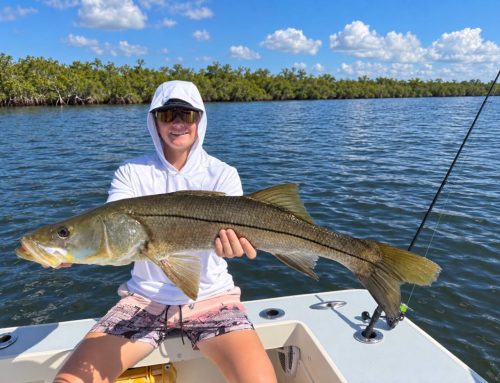
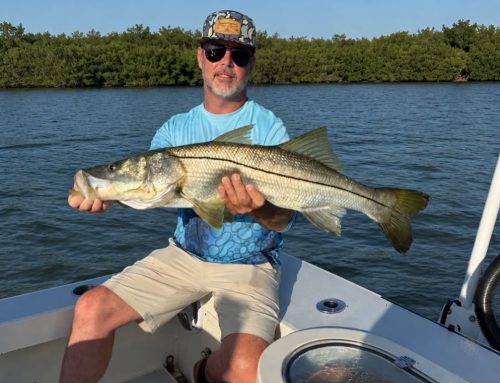
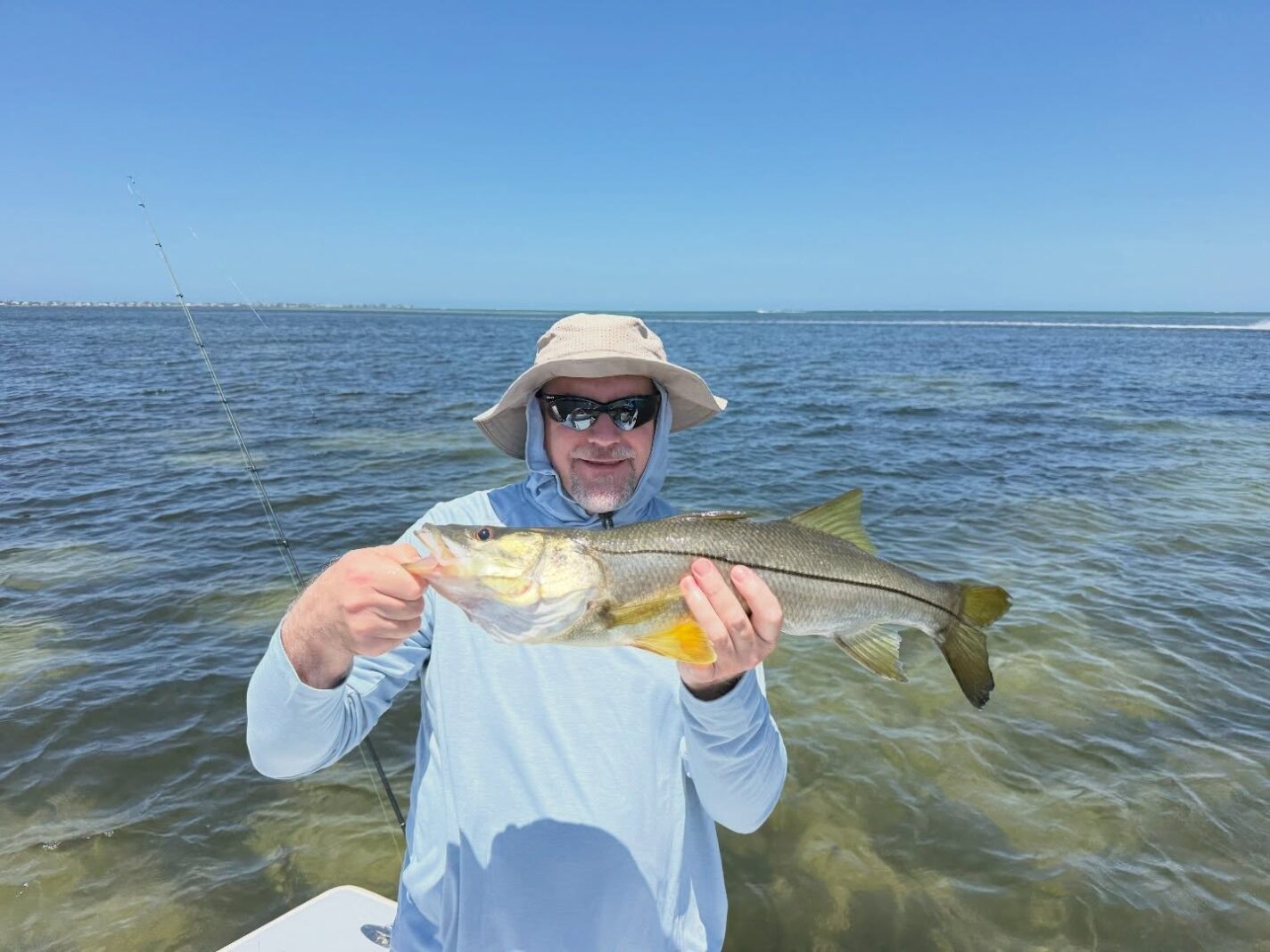
The direct play is outgoing or late incoming pass current. In May, larger snook set up where bait sweeps past shade, bridge structure, and eddies, and the bite improves when outgoing-tide pass snook positioning is matched to live whitebait or threadfins. This is a precision pattern, not a blind-casting pattern.
- Fish the first two hours of outgoing tide or the last hour of incoming tide in 8 to 15 feet around passes, bridge edges, and hard current breaks.
- Hold the boat off the structure and cast parallel to the current seam instead of casting straight at the piling or wall.
- Use 20 to 30 pound fluorocarbon, a 3/0 to 4/0 circle hook, and a scaled whitebait or threadfin that matches the bait school size.
- Keep one artificial rod ready with a 1/4 to 1/2 ounce jighead and paddletail for fish that refuse live bait or sit just below the surface feed.
Grass-Flat Trout Drifts
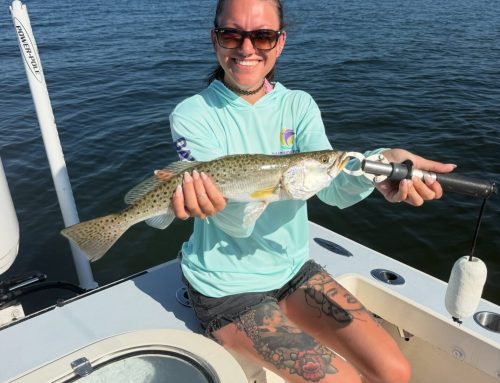
The most repeatable May numbers bite is trout over grass with potholes nearby. Trout spread across the flats once water reaches the upper 70s, and grass-flat trout drift control becomes more important than changing lure colors every ten minutes. Covering water cleanly matters more than sitting on one pothole.
- Drift 3 to 6 feet of mixed grass with sand holes and a slightly deeper outside edge close by.
- Use a 1/8 to 1/4 ounce jighead with a 3 to 4 inch paddletail, or fish live shrimp under a cork with an 18 to 24 inch leader.
- Best windows are first light, steady moving tide, and water in the 78 to 82 degree range with light surface chop.
- Avoid constant trolling-motor correction over the same school; make long drifts, mark the productive stretch, then reset upcurrent.
High-Water Mangrove Redfish
May redfish improve when higher water opens shoreline cover. Flooded mangroves, shoreline points, and creek mouths fish best when mangrove redfish tide timing is aligned with incoming water and bait sliding into the roots. This pattern is about angle, silence, and accurate placement.
- Fish 1 to 3 feet of water on incoming to high tide along mangrove edges, creek mouths, and grass-to-sand transitions.
- Use 20 pound fluorocarbon with a weedless paddletail, or free-line cut bait or whitebait on a 3/0 circle hook.
- Keep the boat one long cast off the bank and skip the bait tight to the roots, overhangs, and outside points.
- Once water starts to fall, move immediately to the first trough, outside point, or cut that drains the same shoreline.
Beach Migration Lanes
May beach water can hold the highest-value fish of the month. Tarpon, Spanish mackerel, and tripletail all become realistic when bait is visible and spring tarpon migration leader selection is matched to the actual forage and water clarity. This is the most weather-dependent plan in the May lineup.
- Run beaches and pass mouths from first light through mid-morning in 8 to 25 feet, prioritizing rolling tarpon, threadfin schools, diving birds, and trap lines.
- Rig tarpon rods with a 5/0 to 7/0 circle hook, 50 to 80 pound leader, and live threadfins, large whitebait, or pass crabs.
- Keep a lighter rod with 20 to 30 pound leader and metal jigs or spoons for Spanish mackerel feeding on outside bait balls.
- Check crab trap buoys and channel markers for tripletail on calm days and pitch a shrimp or small pinfish 3 to 5 feet ahead of the fish.
May Fishing Questions Serious Anglers Ask
These questions change trip format and tackle selection. The answers below are short because the May fishery is straightforward once bait, tide, and wind are read correctly.
Is May more dependable for snook or tarpon around Anna Maria Island?
Inshore snook are the more dependable May target because they feed daily around passes, docks, and mangrove current. Migratory tarpon offer the higher ceiling but need clean beach water, visible bait, and stable wind. Choose snook if you want repeat bites. Choose tarpon if one big fish outweighs overall numbers.
Which tide phase produces the highest May catch rates?
Moving water produces the highest May catch rates. Incoming to high water opens mangrove lanes for redfish and snook, while outgoing tide sharpens pass current for larger snook and tarpon. Trout respond best to steady drift conditions across grass. Slack water is the lowest-percentage period for all major targets.
Do artificials still work in May, or is live bait required?
Artificial lures still work in May for trout, redfish, Spanish mackerel, and school snook, especially when fish are spread out or bait is hard to net. Live whitebait gives the best conversion rate once local bait schools form. Tarpon can eat artificials, but live bait remains the higher-percentage approach.
Should a May trip stay inside the bay or run the beaches and passes?
Stay inside when wind muddies the beach or when your priority is trout, redfish, or steady snook action. Run the beaches and passes when water is clean, bait is visible, and tarpon or Spanish mackerel are primary targets. The right answer changes daily with wind direction and current strength.
Choose the Right May Charter
The correct trip style depends on your target mix. Use an inshore fishing charter if your priority is snook, trout, redfish, and inside-water versatility. Shift to the tarpon fishing page when the plan is beach migration fish, pass current, and heavier tackle.
For anglers bringing kids or first-timers, the family fishing trips page explains the lower-complexity option. Current conditions and recent patterns are on the fishing reports page. Trip prep lives on the FAQ, available dates are on reservations, and special requests belong on the contact page.
May rewards anglers who align bait, tide, and target before leaving the dock. That is the entire game.