Last Updated on November 18, 2026 by Writer
December fishing on Anna Maria Island brings sheepshead around docks and bridges, redfish along low-water edges, spotted seatrout in deeper grass pockets, and catch-and-release snook during suitable weather. The summer beach pattern gives way to a winter approach built around water temperature, changing tides, and the shelter available between cold fronts.
Our Anna Maria Island inshore fishing charters give us several ways to work those conditions. We can concentrate on structure, search the edges of the flats, or adjust to protected water around the island and nearby bays. The goal is not to force a particular species into the day. It is to choose the fishing that makes sense for your group and the conditions.
For visitors spending December in Anna Maria, Holmes Beach, or Bradenton Beach, that creates an opportunity to enjoy the island beyond the beach. A winter charter can include hands-on instruction for beginners, light-tackle fishing for experienced anglers, and a chance to bring home a legal catch.
What Changes Around Anna Maria Island in December?
The transition from November fishing around Anna Maria Island into December puts more emphasis on how fish respond to cooling water. A stretch of mild weather can keep redfish and trout feeding across the flats. A stronger cold front can make deeper holes, canals, channels, and protected structure more important.
Those changes do not happen evenly. One shallow shoreline may cool quickly overnight while nearby deeper water offers more stable conditions. We pay attention to the connection between feeding areas and places where fish can hold through a temperature change.
Water level is another part of the winter picture. Persistent offshore winds can push water away from the coast, leaving flats shallower than a tide prediction alone suggests. NOAA explains how wind and weather affect coastal water levels. For fishing, the practical adjustment is to look at the water actually covering a flat before deciding where fish can travel and feed.
A sunny forecast also does not guarantee a comfortable boat ride. Wind can remain strong after a front passes, and open bay crossings may be rough even when a nearby shoreline looks protected. We use the local National Weather Service marine forecasts when evaluating the day’s options.
What Can You Catch in December?
Sheepshead, redfish, spotted seatrout, black drum, and snook give us different ways to approach a December trip. Their preferred locations overlap, but the presentation and timing can be quite different.
| Target Species | Water to Focus On | December Approach |
|---|---|---|
| Sheepshead | Docks, bridge pilings, seawalls, oyster edges, and rocky structure. | Present small crustacean baits close to cover and stay alert for subtle bites. |
| Redfish | Sandy potholes, grass edges, oyster bars, drains, and accessible mangrove shorelines. | Follow changing water levels and revisit shallow feeding areas during warming periods. |
| Spotted seatrout | Grass beds with nearby holes, protected channels, and deeper basin edges. | Adjust bait depth and retrieve speed when cooling water moves fish off the shallow flats. |
| Snook | Protected canals, deeper docks, creek mouths, and interior holding areas. | Look for feeding opportunities during mild weather and release every snook. |
| Black drum | Oyster beds, dock pilings, bridges, and nearby bottom contours. | Keep shrimp or crab baits near the bottom rather than drifting above the fish. |
Sheepshead Around Docks, Bridges, and Hard Structure
Winter sheepshead fishing around Anna Maria Island becomes an increasingly useful part of the plan in December. Barnacle-covered pilings, rocky edges, and other hard surfaces provide feeding areas where these fish can find crustaceans and shellfish.
Small shrimp and fiddler crabs are established bait choices. Placement matters more than making a long cast. A bait positioned beside a piling or along the base of a rock face is more useful than one drifting well away from the structure.
Sheepshead bites can be difficult to recognize at first. Sometimes the signal is a light tap. Other times the rig simply feels different. Keeping excess slack out of the line helps anglers notice those changes and respond before the bait is gone.
December is part of the winter buildup, not a promise that every piece of structure holds a large school. The later-winter and early-spring spawning movement is a separate part of the season. We work the structure that is producing rather than assuming the peak bite has already arrived.
Redfish Along Low-Water Edges and Warming Flats
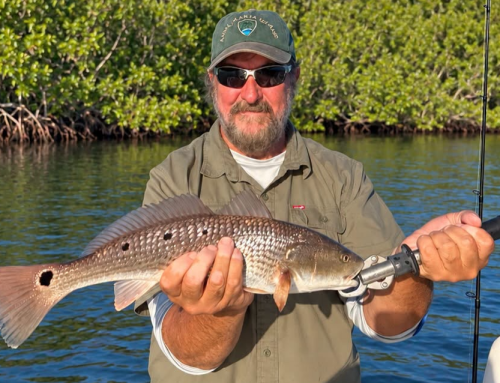
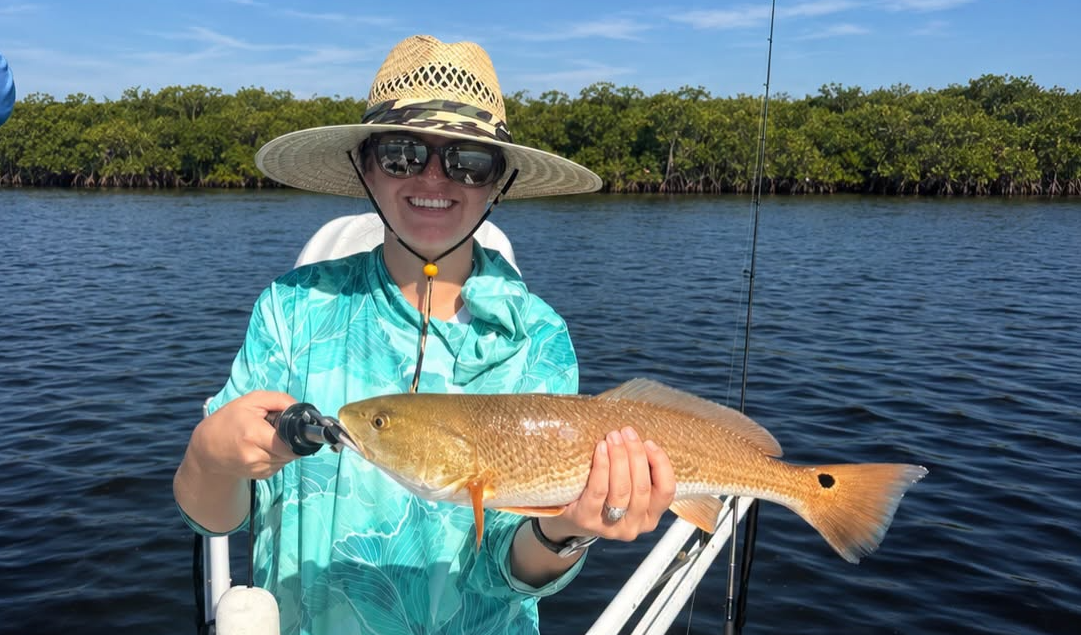
December redfish fishing around Anna Maria Island often comes down to finding enough water over the right bottom. When a flat drains, nearby potholes, small channels, and outside edges become logical places to check.
As water returns, redfish may move toward oyster bars and mangrove shorelines to feed. During a mild, sunny stretch, shallow areas can become more productive as the day warms. That does not mean every afternoon is better, but it gives us a reason to reconsider water that was quiet earlier.
Live shrimp, cut bait, and small baitfish can work when we have located a defined holding area. Soft plastics and weedless spoons give anglers another way to cover water without repeatedly repositioning the boat.
Clear, shallow conditions reward a quiet approach. We try to place the bait ahead of a fish’s path rather than land it directly on the fish. Just as importantly, we avoid forcing the boat onto a flat without enough depth to fish it responsibly.
Spotted Seatrout in Grass Pockets and Deeper Water
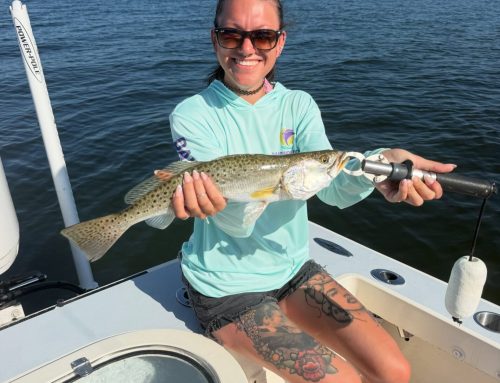
Spotted seatrout remain a useful December target, but the productive depth can change after a cold front. Grass flats with sandy openings deserve attention during settled weather. When the water cools, nearby holes and protected deeper areas become more important.
That seasonal movement is part of the species’ biology. FWC notes that spotted seatrout move into deeper, still water during colder months. Finding that nearby refuge can be more productive than continuing to cast across an empty shallow flat.
A live shrimp beneath a float works well over suitable grass depths. In deeper water, a lightly weighted bait or soft-plastic jig can help reach fish holding closer to the bottom. We adjust the rig to the depth instead of using the same presentation everywhere.
When fishing the flats around Anna Maria Island, a few bites along one edge can help narrow the search. We can then work that section more carefully rather than continuing past the fish.
Catch-and-Release Snook During Mild Weather
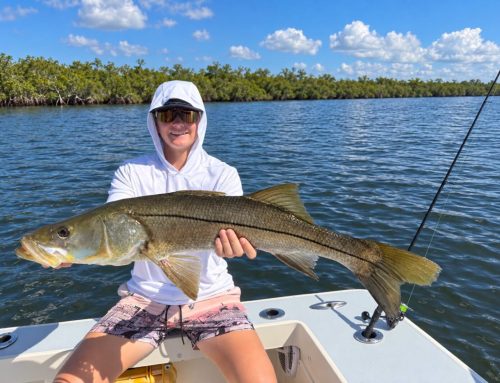
December snook fishing is different from following fish along the beaches in summer. Protected canals, deeper docks, river-connected water, and sheltered interior areas become more relevant as temperatures fall.
Our approach to snook fishing off Anna Maria Island changes with those conditions. During a warming trend, fish may move toward nearby sunny shorelines to feed. After a sharp temperature drop, a slower presentation near suitable holding water may be more appropriate.
We still need tackle strong enough to control a fish around pilings or other cover. A subtle presentation is useful, but not at the expense of unnecessarily extending the fight.
Snook harvest is closed throughout December in both the Tampa Bay and Sarasota Bay management regions. Under the current Florida snook regulations, the winter closure runs from December 1 through the end of February. December snook fishing here is catch-and-release.
Snook are sensitive to severe cold. When fish are visibly stressed by a cold snap, the responsible choice is to leave them alone and focus on another species rather than repeatedly fishing a concentrated refuge.
Black Drum Near Oyster Beds and Pilings
Black drum add another option when we are working structure in December. They feed along the bottom around oyster beds, docks, and bridge pilings, making them a natural target when shrimp and crab baits are already part of the plan.
The important adjustment is keeping the bait down. A presentation that drifts several feet above the bottom may miss fish feeding directly beneath it. Use enough weight to maintain contact without making the rig unnecessarily heavy.
FWC’s black drum fishing guidance highlights those same bottom-feeding habits. For anglers learning to fish natural bait, this provides a useful contrast to casting lures across the flats.
Is Morning or Afternoon Better for December Fishing?
December does not follow the same timing rules as summer. During hot weather, an early departure often helps beat the heat. In winter, the coldest part of the day may not offer the best shallow-water feeding opportunity.
A later start can make sense when sunshine has time to warm a flat and a useful tide develops afterward. On another day, an earlier trip may offer better current or a more manageable wind forecast. Structure fishing can also depend more on having workable current than on reaching the first spot at sunrise.
We consider those factors together when discussing your trip. The best departure is the one that fits the fishing, weather, and group, not simply the earliest time available.
December Family Fishing and Holiday Trips
A family fishing charter can be a good fit for a December visit, especially when the group includes children, beginners, and experienced anglers who want to fish together.
We can focus on manageable presentations and teach the skills that matter for the day’s target. That might mean recognizing a sheepshead bite, drifting a shrimp over grass, or learning how to keep a hooked fish away from a dock piling.
For a mixed group, a flexible inshore trip is usually a better starting point than making the entire outing depend on one species. Tell us who is coming, the ages of any children, and how much boating experience everyone has. Those details help us discuss an appropriate trip.
For Christmas or New Year’s visits, share your available dates when booking. Having more than one possible day gives us more options if a winter front affects the original plan.
Keeping Fish on a December Charter
December offers legal harvest opportunities, but each species has its own rules. Catching a fish does not automatically mean it can go in the cooler.
Under the current Florida sheepshead regulations, harvest is open year-round, with a minimum size of 12 inches total length and a daily limit of eight fish per person. Gear restrictions also apply.
Redfish regulations and spotted seatrout regulations are managed regionally. Size limits, individual bag limits, and any vessel restrictions need to be considered together. We check the applicable rules before keeping fish, and all December snook must be released.
Fish-cleaning services are included for legal catches. Keeping enough for a meal can be part of the experience, but filling a limit is not a requirement for a successful trip.
What to Bring on a December Fishing Trip
Dress for the boat ride, not just the temperature outside your rental. Wind and spray can make a cool morning feel much colder once we leave the dock.
- Comfortable layers: Bring a warm layer and a wind-resistant or waterproof jacket that can be removed as the day warms.
- Suitable footwear: Wear light-soled shoes that can get wet. Avoid black-soled shoes and boots.
- Sun protection: Bring polarized sunglasses, a hat, and sunscreen, even on a cool day.
- Food and drinks: Pack snacks, drinks, and any personal medication needed during the trip.
- A small personal bag: Keep phones and other essentials protected from water, and leave bulky items behind.
We provide conventional rods, reels, bait, tackle, ice, and fishing-license coverage for guests aboard the charter. There is cooler space for your snacks and drinks, so a large personal cooler is not necessary. Our fishing charter FAQs cover additional preparation details.
December Fishing FAQs
Is December a good month to fish Anna Maria Island?
Yes. December offers opportunities for sheepshead, redfish, spotted seatrout, black drum, and catch-and-release snook. The most useful adjustment is staying flexible about species, location, and departure time as winter weather changes.
Does a cold front stop the fishing?
Not necessarily. A front can change where fish hold and how actively they feed. Strong winds may also make a trip impractical. We evaluate the conditions rather than assuming fishing will be excellent or impossible immediately after every front.
Can you keep snook in December?
No. Snook harvest is closed throughout December in both the Tampa Bay and Sarasota Bay management regions. Any snook caught during a December trip must be released.
Is December a good time to book a tarpon charter?
December is not our main migratory tarpon season. Our Anna Maria Island tarpon fishing charters are associated with the spring and summer migration. For a December visit, an inshore trip focused on seasonal targets is the more practical choice.
Where do December fishing trips depart?
Available pickup options include Kingfish Boat Ramp in Holmes Beach and the 59th Street Boat Ramp in Bradenton. The meeting location depends on the trip, so review our charter pickup locations and confirm the exact location with us before departure.
Do charter guests need to buy a fishing license?
No. Our charter fishing license covers guests fishing aboard the boat with us. Separate fishing outside the charter may require your own license or an applicable exemption.
Book a December Fishing Charter With Captain Nate
December fishing on Anna Maria Island rewards a flexible approach. Sheepshead give us a reason to work structure, redfish and trout keep the flats and nearby deeper water in play, and mild stretches can create catch-and-release snook opportunities.
Browse our Anna Maria Island fishing reports for seasonal updates, then let us know what your group would enjoy most. We will help you choose a trip around your experience level, available dates, and fishing goals.
Plan your December day on the water. Book your fishing charter online, call 941-932-5609, or contact Captain Nate to discuss trip options and availability.