Last Updated on August 18, 2026 by Writer
September fishing on Anna Maria Island is the beginning of the fall transition, but it still carries plenty of summer attitude. The mornings can be excellent, the afternoons can be stormy, the bait starts moving with more purpose, and inshore fish begin shifting from pure heat-management mode into heavier feeding patterns.
For anglers booking Anna Maria Island fishing charters, September is one of the most useful months to stay flexible. Snook, redfish, spotted seatrout, mangrove snapper, Spanish mackerel, jacks, ladyfish, sharks, and occasional late tarpon opportunities can all be part of the plan. The best target depends on tide, weather, bait, water clarity, and how the fish are positioned that morning.
The shift from August fishing around Anna Maria Island into September does not mean summer vanishes overnight. Florida does not politely flip a seasonal light switch. Instead, the water slowly changes, bait movement becomes more important, redfish activity improves, snook harvest reopens under current local rules, and mornings remain the best window before heat and weather start throwing elbows.
How September Conditions Shape the Fishing
September fishing around Anna Maria Island is built around moving water, bait, and weather awareness. Early in the month, the pattern can still feel very summer-like. Later in the month, slightly shorter days and small changes in water temperature can begin pushing fish into more predictable fall feeding behavior.
| September Variable | Effect on Fishing | Best Adjustment |
|---|---|---|
| Late-summer heat | Shallow flats can still warm quickly after sunrise. | Start early and move toward shade, current, deeper grass, docks, bridges, or structure as the sun climbs. |
| Moving tide | Current gathers bait around passes, mangrove points, grass edges, potholes, docks, and channel markers. | Prioritize the strongest practical portion of the incoming or outgoing tide. |
| Bait movement | Mullet, pilchards, threadfins, shrimp, crabs, and small baitfish become major clues. | Look for nervous water, flipping bait, birds, surface strikes, and clean water before settling into an area. |
| Redfish activity | Redfish may gather around mangroves, flats, potholes, oyster edges, sandy cuts, and deeper edges. | Fish quietly, cast accurately, and work both high-water cover and falling-tide drains. |
| Rain and storms | Thunderstorms, wind shifts, and dirty water can change the plan quickly. | Favor morning trips and let the day’s range depend on the safest, cleanest, most productive water. |
| Water clarity | Rain, wind, and tide can make some areas cloudy while others stay clean. | Adjust bait size, leader, lure color, and location based on visibility. |
The basic September rule is simple: follow the bait and respect the weather. A shoreline with bait, current, shade, and clean water is worth time. A beautiful flat with no bait and no movement is just a scenic place to practice casting at the void. The void rarely tips.
- Primary inshore targets: Snook, redfish, spotted seatrout, mangrove snapper, Spanish mackerel, jack crevalle, ladyfish, black drum, and mixed-bag species.
- Primary water types: Mangrove shorelines, grass flats, potholes, passes, beach troughs, docks, bridges, channel edges, oyster bars, and nearshore structure when conditions allow.
- Primary baits: Pilchards, threadfins, pinfish, live shrimp, crabs, cut bait, paddletails, spoons, topwater plugs, twitch baits, and small jigs.
- Primary planning risk: Starting too late and losing the best tide window to heat, boat traffic, dirty water, or building storms.
Best September Fishing Patterns Around Anna Maria Island
Snook Around Passes, Beaches, Mangroves, and Docks
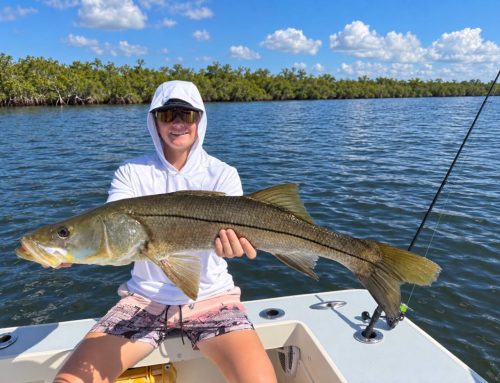
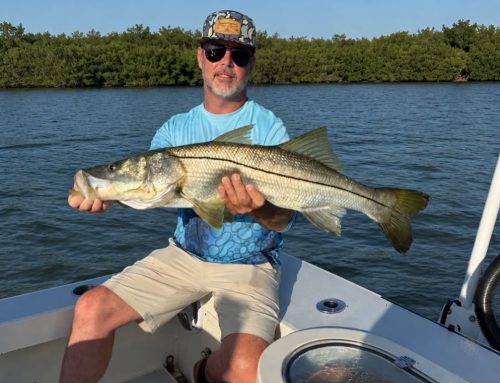
Snook are one of the headline September targets around Anna Maria Island. After the heat of summer, many fish remain close to passes, beaches, bridge areas, docks, mangrove points, and current lanes where bait gets pushed into easy ambush zones.
Early morning can be excellent for beach snook, especially when the surf is calm and bait is sliding along the trough. These fish often hold closer to shore than many anglers expect. Casting parallel to the beach or working a bait naturally through the trough is usually better than launching a heroic cast into deep water just because it feels dramatic. Fishing is not theater, though the snook do enjoy humiliating overconfidence.
Around docks, bridges, mangroves, and seawalls, snook usually hold tight to shade and structure. Accurate casts matter. Live bait can be hard to beat, but soft plastics, paddletails, topwater plugs, and twitch baits can all produce when matched to the current, water clarity, and fish mood.
September also changes the legal conversation. Under current Florida rules, snook harvest in the Tampa Bay and Sarasota Bay management regions is open September 1 through November 30, with slot, bag, permit, and handling requirements. Regulations can change, and Anna Maria Island fishing may involve nearby regional boundaries, so always review the current Florida snook regulations before keeping a fish.
For a deeper species breakdown, read our guide to snook fishing off Anna Maria Island.
Redfish on Mangrove Edges, Grass Flats, and Drains
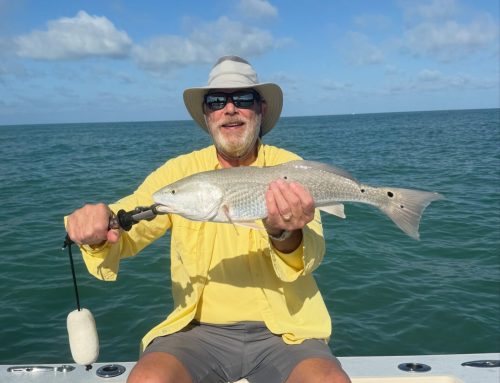
September is a strong month for redfish around Anna Maria Island, Holmes Beach, Bradenton Beach, Anna Maria Sound, Palma Sola Bay, and nearby Tampa Bay waters. As the fall transition begins, redfish often become more consistent around mangrove shorelines, potholes, grass edges, oyster areas, drains, sandy cuts, and deeper edges.
Higher water can push redfish tight under mangrove overhangs and into shoreline cover. Falling water can pull those same fish toward drains, cuts, potholes, and the first available depth change. That makes boat positioning important. The goal is to set up where fish are moving, not park on top of them like a floating refrigerator with a trolling motor.
Live shrimp, pinfish, pilchards, crabs, and cut bait are productive choices when fish are holding in a defined area. Weedless paddletails, spoons, shrimp imitations, and soft plastics work well when covering water along grass and mangrove transitions.
Redfish harvest is managed carefully in Florida. Current local rules list redfish as open year-round with a slot and bag limit, but anglers should always check the current Florida redfish regulations before keeping fish.
More seasonal habitat and tackle information is available in our complete Anna Maria Island redfish fishing guide.
Spotted Seatrout on Deeper Grass and Pothole Chains
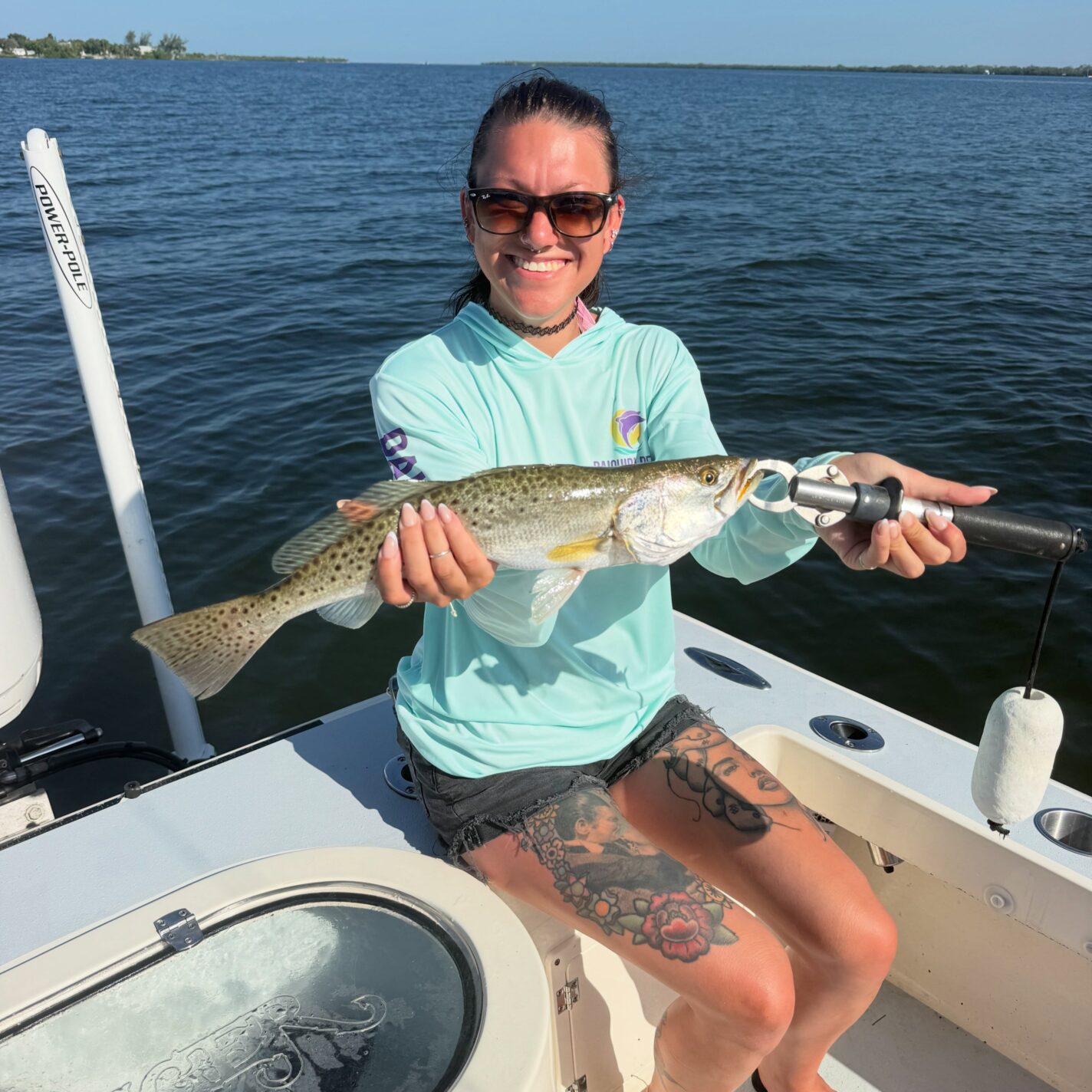
Spotted seatrout remain a dependable September target when the plan focuses on grass flats, pothole chains, channel edges, and water with enough depth and movement to stay comfortable. Early in the month, deeper grass is often more reliable than skinny water after the sun gets high.
Live shrimp under a popping cork is a great option for families, kids, and newer anglers because it keeps the bait in the strike zone and creates enough sound to help trout locate the presentation. Soft plastics, twitch baits, and small jigs are good choices for anglers who want to cover water and locate active fish.
The most productive approach is usually a controlled drift. Once fish are found, reset upcurrent and work the same section again. Repeatedly driving across the flat usually turns a productive drift into an underwater committee meeting where every trout votes to leave.
Spotted seatrout regulations are now managed by region in Florida. Current Tampa Bay and Sarasota Bay rules list an open year-round season with regional bag and slot limits, but anglers should review the current Florida spotted seatrout regulations before harvesting fish.
For more on the habitat that supports trout, redfish, snook, and mixed-bag action, read our guide to fishing the flats off Anna Maria Island.
Mangrove Snapper Around Docks, Bridges, and Markers
Mangrove snapper are one of the most useful September targets around Anna Maria Island. They feed around docks, bridges, rock piles, channel markers, seawalls, mangrove roots, and nearshore structure when Gulf conditions allow.
Snapper are especially helpful on days when the flats bite slows down in the heat or when a family group wants steady action. Small live baits, shrimp, and cut bait presented close to structure can produce fast bites. The challenge is reacting quickly. Mangrove snapper hit hard, turn immediately, and try to return to cover before anyone has finished saying, “Was that a bite?”
Light tackle can make snapper fishing fun, but the gear still needs enough backbone to pull fish away from pilings, rocks, and roots. Too much slack around structure is a donation to the barnacle kingdom.
Snapper rules vary by species and water type, so review the current Florida snapper regulations before keeping fish.
Spanish Mackerel, Jacks, Ladyfish, and Mixed-Bag Action
September can also bring fast mixed-bag fishing when bait is concentrated around channels, grass edges, passes, beaches, and markers. Spanish mackerel, jack crevalle, ladyfish, bluefish, small sharks, and other species may crash bait schools during moving water.
This type of fishing is a strong option when the goal is action instead of one specific trophy fish. Spoons, small jigs, live bait, and flashy moving presentations can all work. Watch for birds, surface strikes, and bait showering out of the water. When the water looks nervous, something nearby is usually being rude to the baitfish.
Mixed-bag fishing is also useful for families and first-time anglers because it keeps rods bent and gives everyone a chance to participate without needing perfect casting accuracy.
Late-Season Tarpon Opportunities
September is not the peak tarpon month around Anna Maria Island. The main migratory push is strongest in spring and early summer, and our dedicated Anna Maria Island tarpon fishing charters are most focused around that primary season.
That said, tarpon can still show up in September when bait, tide, water clarity, and weather line up. Some fish may remain around bridges, passes, deeper channels, backcountry areas, or bait-rich zones. These opportunities are more condition-dependent than peak-season beach fishing, so September anglers should usually treat tarpon as a bonus target rather than the entire plan.
Tarpon are managed as a catch-and-release fishery in Florida. Large tarpon must remain in the water unless an angler is pursuing an eligible record with the proper tag. Review the current Florida tarpon regulations before targeting them.
Choosing the Right September Charter
The best September charter depends on the group, the tide, and the weather. Some mornings call for working mangrove edges and potholes for redfish. Others set up better for snook around passes and docks. Calm conditions may open up nearshore structure or beachside action, while wind or storms may make protected inshore water the smarter choice.
| Trip Goal | Best Charter Style | Why It Works in September |
|---|---|---|
| Steady action and variety | Anna Maria Island inshore fishing charter | Snook, redfish, trout, snapper, mackerel, jacks, ladyfish, and mixed-bag species provide flexible options. |
| Redfish and snook focus | Targeted inshore trip | September tide windows can position fish along mangroves, passes, docks, grass edges, drains, and potholes. |
| Family-friendly fishing | Family fishing charter | Grass flats, structure, live bait, and mixed-bag action are well suited for kids and first-time anglers. |
| Big-fish possibility | Flexible inshore or tarpon discussion | Late tarpon, sharks, larger snook, and redfish can be possible, but conditions should decide the plan. |
| Vacation fishing | Custom AMI fishing trip | The day can be adjusted around experience level, target species, weather, and the most productive nearby water. |
For most September groups, inshore fishing is the best starting point. It offers the most flexibility and gives the captain room to move between protected water, structure, flats, passes, and nearby Gulf options if conditions allow.
September Fishing by Area
Anna Maria Island Beaches and Passes
Beach troughs, pass edges, and current seams can hold snook, Spanish mackerel, jacks, sharks, and occasional tarpon. Early morning is the best window, especially when the Gulf is calm and bait is visible.
Passes can be especially productive when tide movement pushes bait through narrow lanes. The key is controlled positioning. Fish often sit where current does the food delivery for them. Convenient for fish, annoying for bait, useful for anglers.
Anna Maria Sound and Palma Sola Bay
Anna Maria Sound and Palma Sola Bay offer grass flats, mangrove edges, potholes, channels, and protected water that can be useful throughout September. Redfish, snook, trout, snapper, ladyfish, jacks, and black drum may all be part of the picture depending on tide and water clarity.
These areas are especially valuable when wind or Gulf conditions make open beach or nearshore fishing less practical.
Holmes Beach
Holmes Beach fishing charters are a strong September option because the area sits near both Gulf-side and backcountry water. That variety makes it easier to adjust between beach, pass, flat, channel, dock, and mangrove patterns.
September fishing near Holmes Beach can produce snook, redfish, trout, snapper, mackerel, jacks, and mixed-bag action when the tide and bait line up.
Bradenton and Tampa Bay Edges
Bradenton fishing charters provide quick access to productive inshore water around Tampa Bay, the Manatee River influence, flats, channels, mangroves, and backcountry areas. September can be excellent when bait moves across these edges and predators follow.
This zone is especially useful for redfish, snook, trout, black drum, snapper, and mixed action when protected water is the better call.
September Weather and Trip Timing
September weather around Anna Maria Island still deserves respect. Heat, humidity, thunderstorms, tropical systems, wind shifts, and changing water clarity can all affect the day’s plan. Morning trips usually provide the best mix of comfort, active fish, and manageable weather.
The National Weather Service notes that July through early September is typically the peak of the rainy season in West Central Florida, while mid-September into early October is more of a wind-down period with variability from tropical systems and early fall fronts. Review the Tampa Bay rainy season overview for general seasonal context.
That does not mean September is a bad fishing month. It means the best trips are planned intelligently. Start early, fish the best tide, keep the day flexible, and avoid pretending that thunderstorms are merely decorative sky furniture.
What to Bring on a September Fishing Charter
September is still warm, bright, humid, and weather-aware. Guests should dress for sun, spray, and changing conditions.
- Polarized sunglasses: Helpful for seeing bait, bottom changes, fish movement, and glare lines.
- Hat and sun-protective clothing: Lightweight long sleeves are useful in September sun.
- Sunscreen: Apply before the trip and bring extra.
- Drinks and snacks: Hydration matters during late-summer fishing.
- Rain jacket: September showers can move through quickly.
- Phone or camera: Keep it protected from water and salt.
- Personal medication: Bring anything you may need while away from the dock.
- Light-soled shoes or sandals: Avoid black-soled shoes or boots.
Fishing licenses, bait, rods, reels, tackle, ice, and fish cleaning for legal harvested fish are provided on our charters. Guests should bring personal items, snacks, drinks, and weather-appropriate clothing.
September Fishing FAQs
Is September a good month to fish Anna Maria Island?
Yes. September can be a very productive month for snook, redfish, spotted seatrout, mangrove snapper, Spanish mackerel, jacks, ladyfish, sharks, and mixed-bag species. The best results usually come from early starts, moving water, visible bait, and a flexible inshore plan.
What fish are biting around Anna Maria Island in September?
Common September targets include snook, redfish, spotted seatrout, mangrove snapper, Spanish mackerel, jack crevalle, ladyfish, black drum, sharks, and occasional late-season tarpon. The exact target depends on tide, weather, bait, and water clarity.
Is snook season open in September around Anna Maria Island?
Under current Florida rules, snook harvest is open September 1 through November 30 in both the Tampa Bay and Sarasota Bay management regions. Anglers must follow slot, bag, license, permit, and handling requirements. Always check FWC before keeping snook because regulations and boundaries matter.
Is September good for redfish?
Yes. September is one of the better months to focus on redfish around mangroves, grass flats, potholes, drains, oyster edges, docks, and deeper bay edges. As bait movement improves, redfish often become more consistent and easier to pattern.
Are tarpon still around Anna Maria Island in September?
Some tarpon may still be around in September, but the main migratory season is usually earlier. Late-season tarpon are more condition-dependent, so September anglers should usually plan around inshore fishing first and treat tarpon as a bonus opportunity when conditions line up.
What time of day is best for September fishing?
Morning is usually the best window. Temperatures are more comfortable, boat traffic is lighter, and fish often feed more actively before the sun gets high. A strong tide can extend the bite later into the morning.
Is September fishing good for families and beginners?
Yes. September can be excellent for families and first-time anglers because inshore trips can be adjusted around protected water, live bait, grass flats, docks, snapper, trout, jacks, ladyfish, and other action-friendly targets.
Do guests need to buy a fishing license?
No. Guests fishing with us on a charter are covered by the boat’s charter fishing license. We also provide bait, rods, reels, tackle, ice, and fish cleaning for legal harvested fish.
What happens if September weather changes the plan?
The trip plan can be adjusted based on wind, storms, water clarity, tide, and fish behavior. If Gulf-side or open-water conditions are not ideal, protected inshore water around Anna Maria Island, Holmes Beach, Bradenton, Anna Maria Sound, Palma Sola Bay, and nearby Tampa Bay areas may be the better option.
Book a September Fishing Charter With Captain Nate
September fishing around Anna Maria Island rewards anglers who pay attention to the transition. Snook become a bigger part of the legal and seasonal conversation, redfish activity improves, trout remain productive on grass, snapper keep structure fishing interesting, and bait movement can create fast mixed-bag action.
The best plan is not to force one target all morning. The best plan is to fish the conditions in front of us. Calm beach water may create a snook or mackerel opportunity. Moving water along mangroves may fire up redfish. Deeper grass may produce trout and steady action. Docks, bridges, and markers may turn into productive snapper zones when the sun gets higher.
Captain Nate offers fishing trips around Anna Maria Island, Holmes Beach, Bradenton Beach, Anna Maria Sound, Palma Sola Bay, Tampa Bay, and nearby Gulf waters. Trips are available for experienced anglers, families, kids, and first-time fishermen, with the day’s plan adjusted to the weather, tide, target species, and comfort level of the group.
Before choosing a date, browse the latest Anna Maria Island fishing reports for recent updates from the water.
Ready to plan your September fishing trip? Book your fishing charter online, call 941-932-5609, or contact Captain Nate with questions about tides, targets, trip length, and availability.