Last Updated on June 23, 2026 by Writer
July fishing on Anna Maria Island is a high-summer fishery shaped by early starts, moving water, concentrated bait, and rapidly changing weather. Tarpon remain a headline target along Gulf beaches and passes, while snook, redfish, spotted seatrout, mangrove snapper, Spanish mackerel, and mixed-bag species keep Anna Maria Island fishing charters productive.
The transition from June fishing around Anna Maria Island into July brings warmer water, more recreational boat traffic, and a greater chance of afternoon thunderstorms. Morning trips generally provide the best combination of comfortable temperatures, manageable weather, and active fish.
How July Conditions Shape the Fishing
July is not a month for working the same shoreline all day and hoping the fish eventually surrender. Productive fishing revolves around four things: current, shade, depth, and bait. As those conditions change, the target area and presentation should change with them.
| July Variable | Effect on Fishing | Best Adjustment |
|---|---|---|
| Summer heat | Shallow feeding windows become shorter after sunrise. | Begin early and move toward current, shade, deeper grass, or structure as the sun rises. |
| Tide movement | Current carries bait and creates predictable feeding lanes. | Prioritize the strongest practical portion of the incoming or outgoing tide. |
| Bait concentration | Predators gather around beach schools, passes, grass edges, bridges, and channel markers. | Look for nervous water, birds, surface strikes, and visible bait before settling into an area. |
| Afternoon weather | Lightning, wind shifts, and heavy rain can develop quickly. | Favor morning charters and avoid building the entire plan around uncertain afternoon conditions. |
| Boat traffic | Pressure can scatter shallow fish and disrupt beach travel lanes. | Fish at first light, approach quietly, and position ahead of moving fish rather than chasing them. |
The basic July rule is simple: when the open flats become hot and inactive, move to water offering current, shade, depth, or concentrated forage.
- Primary targets: Tarpon, snook, redfish, spotted seatrout, mangrove snapper, Spanish mackerel, jacks, and ladyfish.
- Primary water types: Gulf beaches, passes, deeper grass flats, mangrove shorelines, docks, bridges, channels, and nearshore structure.
- Primary baits: Pilchards, threadfins, pinfish, live shrimp, crabs, cut bait, paddletails, topwater plugs, spoons, and small jigs.
- Primary planning risk: Starting too late and spending the best tide window battling heat, traffic, or developing storms.
Five Productive July Fishing Patterns
Tarpon Along Gulf Beaches and Passes
July remains an important tarpon month around Anna Maria Island. Mature fish may travel along Gulf beaches, stage near passes, follow bait into Tampa Bay, or gather around strong tide lines. Their exact route changes with wind, water clarity, current, and bait position.
Calm mornings provide the best opportunity to locate rolling or traveling fish before boat traffic builds. The higher-percentage strategy is to identify the direction of travel, position the boat ahead of the fish, and deliver a natural bait into the lane. Constantly running from one roll to another usually pushes fish away and reduces the quality of the presentation.
Live crabs, threadfins, pilchards, and other locally available forage can all produce. Strong knots, properly adjusted drag, and controlled boat positioning matter more than owning an enormous collection of tackle.
Anglers interested in pursuing the Silver King can learn more about Captain Nate’s Anna Maria Island tarpon fishing charters.
Tarpon are managed as a catch-and-release fishery in Florida. Fish longer than 40 inches must remain in the water unless an angler is pursuing an eligible record with a tarpon tag. Review the current Florida tarpon regulations before fishing.
Catch-and-Release Snook Fishing
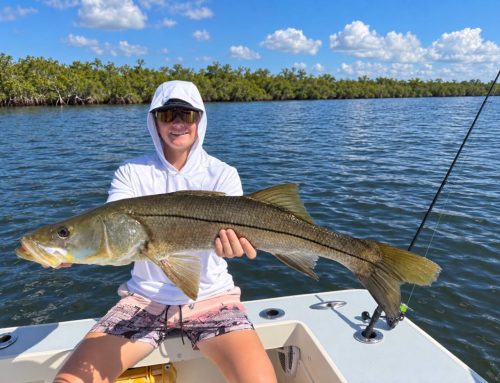
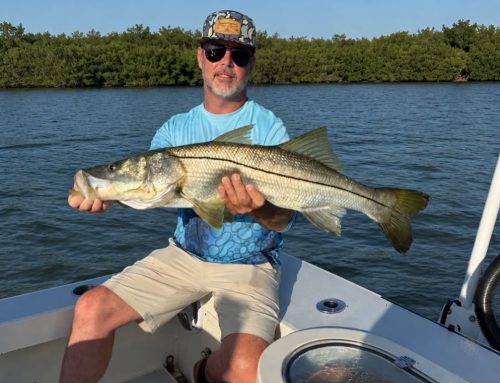
Snook remain active during July around beach troughs, pass edges, mangrove points, bridge approaches, docks, and other shaded structure. The strongest bite often occurs during first light or whenever a moving tide sweeps bait through a defined current seam.
Beach snook can hold surprisingly close to shore. Present live bait, soft plastics, or small plugs parallel to the trough instead of casting directly toward deeper water. Around docks and mangroves, place the bait close to shade and be ready to turn the fish before it reaches pilings or roots.
July snook fishing around Anna Maria Island is catch-and-release because harvest is closed during the summer in the Tampa Bay and Sarasota Bay management regions. Regulations can change, so verify the current Florida snook regulations before every trip.
For a deeper look at seasonal locations, baits, tackle, and presentations, read Captain Nate’s guide to snook fishing off Anna Maria Island.
Redfish Around Mangroves and Draining Edges
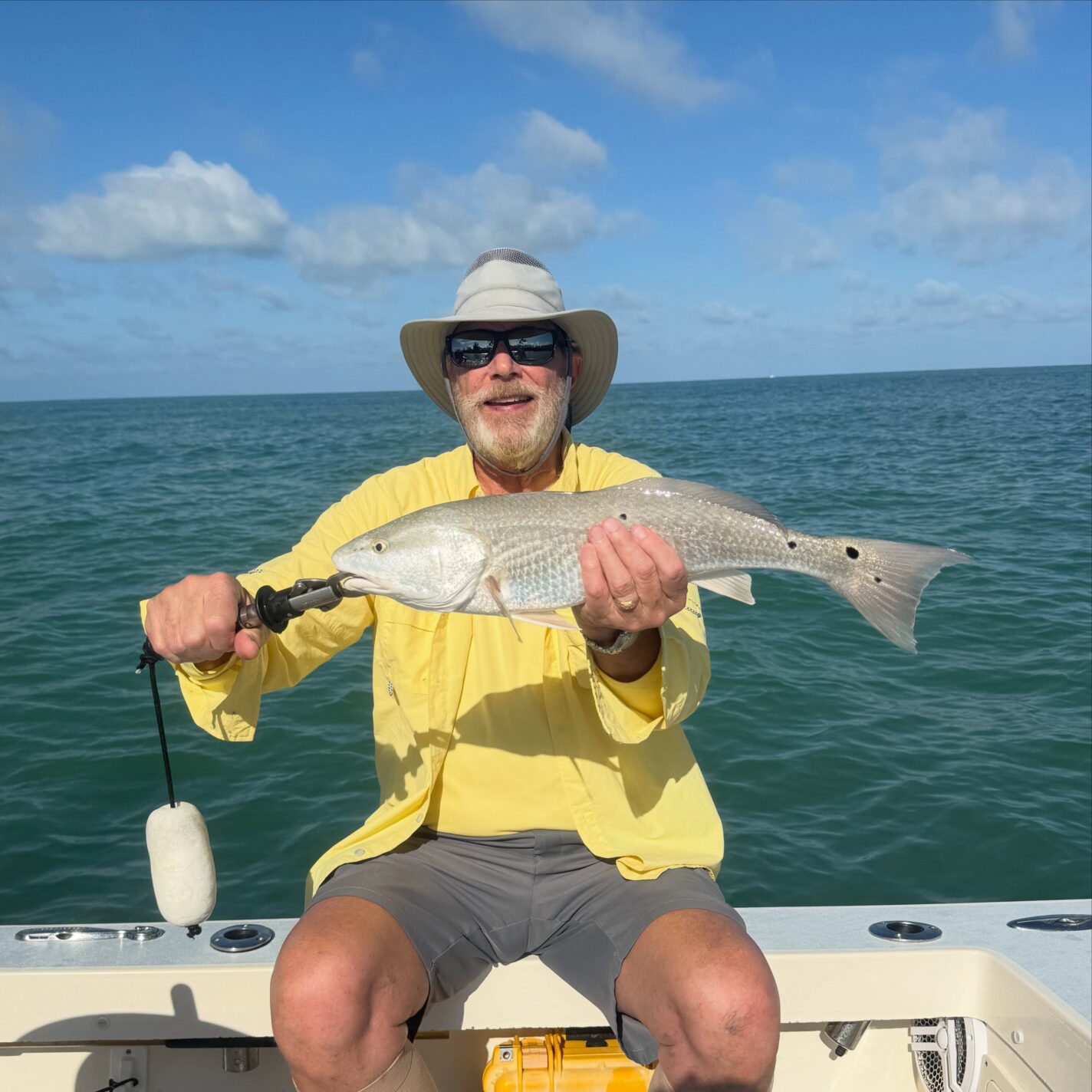
Summer redfish reward accurate casts and quiet boat control. Higher water allows fish to push beneath mangrove overhangs, onto shoreline grass, and into protected pockets. As the tide falls, those fish retreat toward drains, potholes, sandy cuts, oyster edges, and the first available depth change.
Live bait and cut bait are effective when fish are holding in a small area. Weedless paddletails, shrimp imitations, and spoons work well when covering shoreline or grass transitions.
Avoid running the trolling motor directly over shallow fish. Set up one long cast away, work the likely holding water thoroughly, and let the tide bring fish toward the presentation. July redfish may feed aggressively, but they can still spook quickly in clear, shallow water.
More seasonal habitat and tackle information is available in the complete Anna Maria Island redfish fishing guide.
Spotted Seatrout and Mixed-Bag Grass Fishing
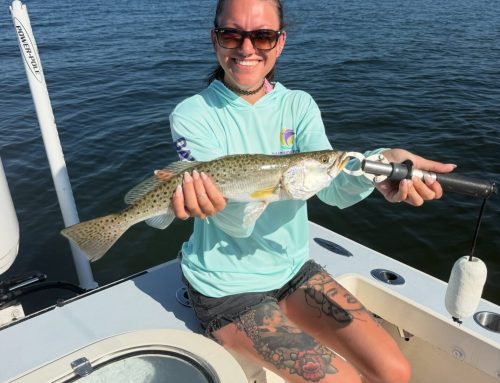
Spotted seatrout provide dependable summer action when anglers move away from overheated shallow water and concentrate on deeper grass, pothole chains, channel edges, and areas receiving steady current.
Live shrimp beneath a popping cork is a reliable option for families and newer anglers. Paddletails, twitch baits, and small jigs allow experienced anglers to cover more water. Make a controlled drift, mark the productive section, and reset upcurrent rather than repeatedly driving across the fish.
Ladyfish, jack crevalle, Spanish mackerel, bluefish, small sharks, and other species may join the same bite. That variety makes deeper grass fishing a strong July choice when the goal is frequent action rather than one specific trophy fish. Captain Nate’s guide to fishing the flats off Anna Maria Island explains more about this productive habitat.
Mangrove Snapper Around Structure
Mangrove snapper become an increasingly useful July target around docks, bridges, rock piles, channel markers, and nearshore hard bottom. They are particularly valuable when midday heat reduces activity across the open flats.
Small live baits, shrimp, and cut bait presented close to structure can produce steady bites. Use enough weight to keep the bait in the strike zone without making the presentation unnecessarily heavy.
Snapper strike quickly and immediately attempt to return to cover. Anglers need to stay alert, keep unnecessary slack out of the line, and apply pressure as soon as the fish commits.
Should You Book Tarpon or Inshore Fishing in July?
Tarpon Fishing
A tarpon trip is the right choice when landing one powerful bucket-list fish matters more than the total number of bites. Tarpon fishing requires patience, heavier tackle, precise presentations, and an understanding that conditions determine when and where the fish can be targeted effectively.
Inshore Fishing
An Anna Maria Island inshore fishing charter is better for anglers who want more casting, greater species variety, and the flexibility to move among snook, redfish, trout, snapper, and other summer targets.
Inshore fishing also provides more protected options when wind or Gulf conditions make beachside tarpon fishing difficult. The day’s plan can be adjusted around tide movement, bait location, water clarity, and the experience level of the group.
Family Fishing
A family fishing charter is usually the best choice when the group includes children, first-time anglers, or guests who prefer steady action. An early trip built around live bait, grass flats, and structure can provide plenty of rod-bending without committing the entire group to a technical big-fish hunt.
July Fishing FAQs
Is July a good month to fish Anna Maria Island?
Yes. July offers opportunities for tarpon, snook, redfish, spotted seatrout, mangrove snapper, Spanish mackerel, and mixed-bag species. Success depends more on starting time, tide movement, bait location, and weather than on fishing for the greatest possible number of hours.
What time of day is best for July fishing?
Early morning is normally the most reliable window. Temperatures are more comfortable, boat traffic is lighter, and many predators feed before the sun pushes bait and fish toward deeper or shaded water. A strong tide can extend the bite later into the morning.
Are tarpon still around Anna Maria Island in July?
Yes. July remains within the primary migratory tarpon season around Anna Maria Island. Fish may be found along Gulf beaches, near passes, around bridges, and in Tampa Bay travel lanes. Wind, water clarity, bait concentration, and tide movement determine whether tarpon should be the day’s primary target.
Can anglers keep snook during July?
No. Recreational snook harvest is closed throughout July in the Tampa Bay and Sarasota Bay management regions. Snook can still be targeted using responsible catch-and-release practices.
What should guests bring on a July charter?
Bring drinks, snacks, polarized sunglasses, sunscreen, sun-protective clothing, and any necessary personal medication. Captain Nate’s charter boat covers the fishing license and supplies conventional rods, reels, tackle, bait, and fish-cleaning services for legal harvested catches.
Is July fishing suitable for children and beginners?
Yes. Early inshore trips can be tailored to children, beginners, and mixed-skill groups. Grass flats, docks, bridges, and other structure can provide steady action without requiring long runs or advanced casting skills.
Where do July fishing trips depart from?
Pickup and departure arrangements depend on the trip and current conditions. Captain Nate fishes around Anna Maria Island, Bradenton Beach, Tampa Bay, Palma Sola Bay, Anna Maria Sound, and nearby Gulf waters. Visitors staying near the center of the island can also review information about Holmes Beach fishing charters.
Plan a July Fishing Trip With Captain Nate
July rewards anglers who match the trip to the conditions instead of forcing one target all morning. Calm beach water may create a tarpon opportunity, while wind or changing visibility may make protected inshore water the smarter choice. Strong tide movement can produce snook, redfish, and trout, while bridges, docks, and nearshore structure provide productive alternatives for mangrove snapper and mixed-bag action.
Captain Nate offers fishing trips for experienced anglers, families, children, and first-time fishermen. Each trip is adjusted to the weather, tide, target species, and experience level of the group.
Before choosing a date, browse Captain Nate’s latest Anna Maria Island fishing reports for recent updates from the water.
Ready to plan your July fishing trip? Book your fishing charter online, call 941-932-5609, or contact Captain Nate with questions about tides, targets, trip length, and availability.